Best Driving Test Manoeuvres for UK Learners
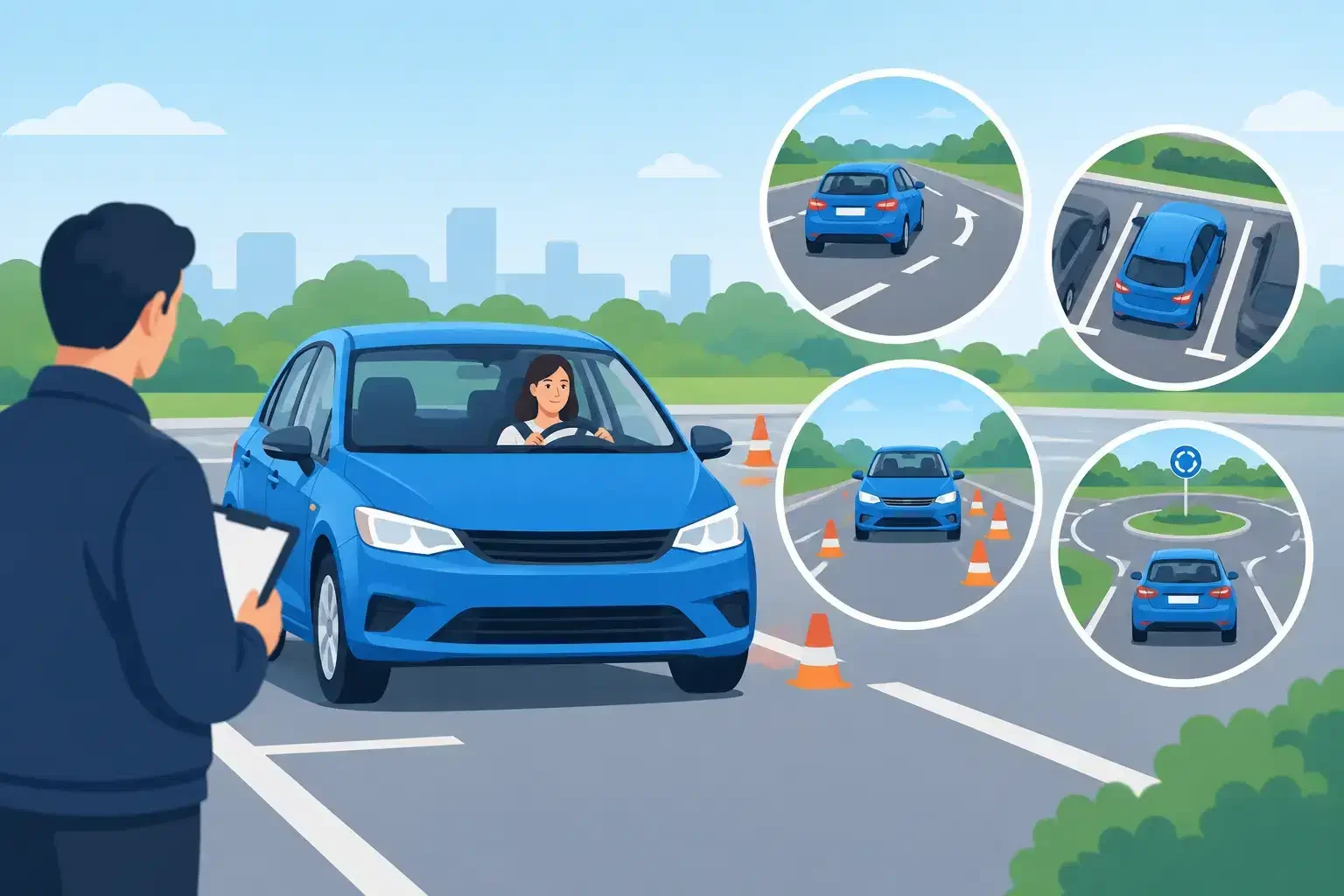
A manoeuvre can feel like the part of the practical test where everything goes quiet and every small steering movement suddenly matters. The best driving test manoeuvres are not about looking perfect or completing them at high speed. They are about showing that you can keep full control of the car, make good observations and respond safely if something changes.
For learners in Birmingham, this matters because you may be asked to carry out a manoeuvre on a narrow residential road, near parked cars, or in a busy car park. The setting can vary, but the standard does not: safe, controlled driving with sensible decisions throughout.
What makes a driving test manoeuvre “good”?
There is no single manoeuvre that is easier for every learner. Some people find reversing into a bay straightforward because the lines give them clear reference points. Others prefer parallel parking because they can work at a steady pace on a quiet road. The best manoeuvre for you is the one you understand well enough to adapt when the space, angle or traffic is different from your usual practice.
Your examiner is not expecting you to park with centimetres to spare. They are looking for three things: control of the vehicle, effective all-round observation and a safe outcome. If you pause to check your surroundings, correct your position or start again when it is safe to do so, that can be a sensible decision rather than a fault.
The key is to avoid treating a manoeuvre as a fixed routine. Reference points are useful during lessons, especially when you are learning clutch control and steering timing. But roads, bays and parked cars are not all identical. Use your references as guidance, then judge the position of the car for yourself.
The four driving test manoeuvres you may be asked to do
On the UK practical driving test, you will normally be asked to complete one reversing manoeuvre. You could also be asked to carry out the emergency stop exercise. Knowing the purpose of each task makes practice far less stressful.
Parallel parking
For parallel parking, you will pull up alongside a parked vehicle and reverse into a space behind it. This tests low-speed control, accurate steering and your awareness of other road users.
Take your time with the set-up. A good starting position beside the parked car gives you room to reverse safely and makes the rest of the manoeuvre easier. Before moving, check mirrors and blind spots thoroughly. Keep looking around throughout the manoeuvre, particularly for pedestrians, cyclists and vehicles approaching from behind.
The common mistake is focusing so hard on the kerb that observations disappear. The kerb matters, but people matter more. If a vehicle approaches closely or a pedestrian steps into the road, stop if necessary and let them pass. Continue only when it is safe.
You do not have to finish perfectly close to the kerb. You should be reasonably near it, without touching or mounting it, and leave the car parked safely and legally. If you end up too far away, use a controlled correction if there is room and it is safe.
Bay parking – reversing in
You may be asked to reverse into a marked bay in a car park, then drive out forwards. This is often practised in quieter car parks at first, but real test conditions may include pedestrians walking between vehicles, cars reversing nearby and bays with faded markings.
Approach slowly and give yourself enough space to turn. As you reverse, keep the car moving at a walking pace using careful clutch control and gentle braking. Look mainly through the rear window where appropriate, while regularly checking both sides and the front of the car as it swings.
Aim to finish centred in the bay and fully within the lines. If you are not happy with the position, it is usually better to correct it calmly than to hope it is good enough. A safe correction shows judgement. Rushing because someone is waiting is never worth it.
Bay parking – driving in and reversing out
Alternatively, you may drive forwards into a bay and reverse out. Driving into the space is usually the simpler part. The important work begins when you reverse, because your view is more limited and you must be especially alert to movement behind and beside the car.
Before reversing, check all around. Continue with slow, controlled movement and frequent observation. As the front of your car swings out, make sure it does not create a problem for passing traffic or people walking through the car park.
This manoeuvre is a useful reminder that good driving is not just about where you put the car. It is about recognising where the risks are likely to be. Car parks can be unpredictable, so patience and proper observations count for a great deal.
Pull up on the right and reverse for two car lengths
In this exercise, you will be asked to pull up on the right-hand side of the road when it is safe, reverse for around two car lengths, then rejoin the traffic safely.
The first decision is choosing a suitable place. Avoid bends, junctions, driveways, crossings and places where your parked car would cause an obstruction. Signal only if it will help other road users understand what you are doing. As you move across the road, check that you have enough time and space to do so without making anyone brake or change direction.
Once parked, secure the car and prepare to reverse. The road may be quiet when you begin but change quickly, so keep observing continuously. When you are ready to pull away again, check carefully in both directions and give way where needed. Do not feel pressured to move until the road is clear enough.
The emergency stop: not a parking manoeuvre, but still important
The emergency stop is selected at random, so you may not be asked to do it. If you are, the examiner will first make sure the road is suitable and will tell you when to stop. Your job is to stop the car promptly under control, then secure it and move off safely when instructed.
You should brake firmly, keep both hands on the steering wheel and press the clutch just before the car stalls. Once stopped, apply the handbrake and select neutral if appropriate. Do not look in the mirrors before braking – in a genuine emergency, your first responsibility is to stop. Before moving away afterwards, carry out full observations as normal.
How to practise manoeuvres without relying on luck
The strongest practice is varied practice. Repeating the same parallel park outside the same house may build confidence, but it will not fully prepare you for test day. Try different road widths, different sizes of parked car and different bay layouts. Practise in daylight and, where suitable, in the conditions you may meet during evening lessons.
Ask your instructor to explain what they are watching for at each stage. Understanding why you check a blind spot or pause for a pedestrian makes the routine easier to remember under pressure. At G’s Driving School, every minute of your lesson is spent behind the wheel, so manoeuvre practice can be built around the areas where you need the most support.
It also helps to practise recovery. Deliberately finish slightly wide of a bay line or a little far from the kerb, then learn how to put it right safely. Learners often worry that one imperfect movement means failure. In reality, an examiner will be more interested in whether you recognise the issue, keep observing and correct it without creating risk.
Common reasons manoeuvres go wrong on test day
Most faults happen because of pressure rather than a lack of ability. Learners rush the clutch, steer too quickly, forget an observation or keep going when they should pause. The answer is usually not a more complicated routine. It is slowing down and returning to the basics.
Keep the car at a very low speed. Make observations before and during movement. Be prepared to stop. If another road user appears, deal with them safely instead of trying to complete the manoeuvre before they reach you. The test is assessing safe driving, not whether you can perform a memorised sequence without interruption.
A stall is not automatically a fail either. Secure the car, restart calmly and check again before moving. The same applies if you need an extra shunt in a bay or a careful correction during parallel parking. What matters is the quality of your response.
The next time you practise, choose one manoeuvre that makes you nervous and ask to repeat it in a new location. Confidence grows when you can handle the unexpected calmly, one safe decision at a time.